
Some places don’t appear in any travel itinerary. They don’t make the “Top 10 Mexico” lists. They’re just shown to you by a friend who happens to be from there.
Josué, my buddy from Michoacán, told me one morning in Morelia: “Wey, we’re going to Uruapan. I’ll take you to the waterfalls.”
And that’s how I ended up descending 579 steps in the midday Michoacán sun toward one of the most beautiful things I’ve ever seen.
What is the Tzaráracua Ecotourism Center?
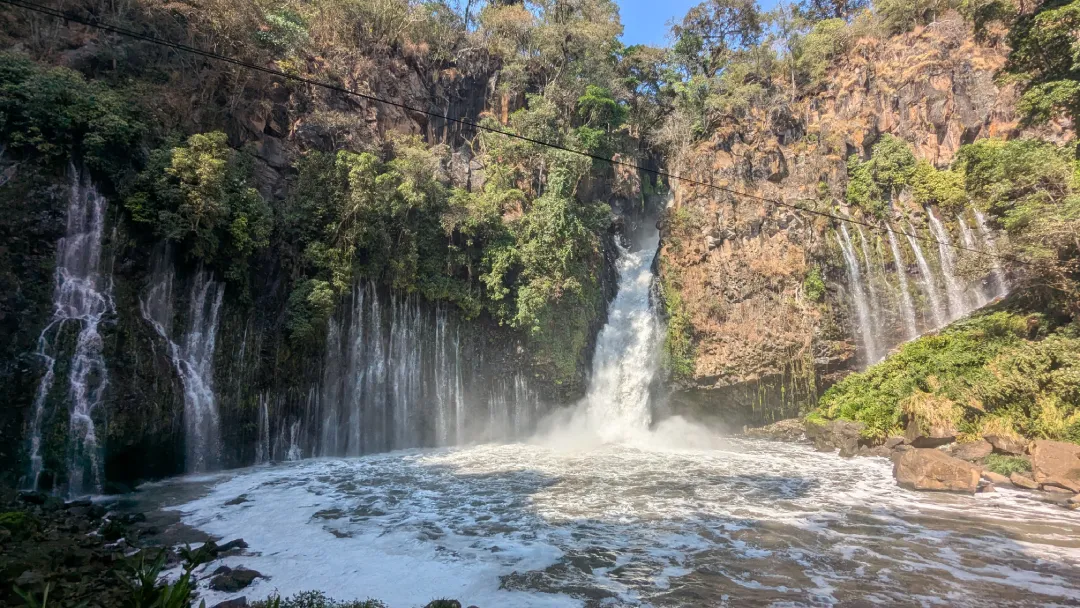
Tzaráracua is a waterfall roughly 40 meters high, located about 10 kilometers south of Uruapan, formed by the Cupatitzio River. Its name comes from Purépecha — like so many beautiful things in Michoacán — and means something close to “place where the water falls.”
The Ecotourism Center is the natural park surrounding the waterfall. More than 45 hectares of pine and oak forest, trails, viewpoints, and infrastructure that lets you reach the bottom of the canyon on foot or on horseback.
It’s not a luxury park. It doesn’t have perfect signage or English-speaking guides. But it has something many tourist spots have lost: it feels authentic.
The Road from Morelia
We left early from Morelia — Josué, his mom, and me. The road to Uruapan is one of those routes that remind you why Michoacán is such a particular state. Endless avocado orchards, mountains peeking through the morning mist, and that fresh air that smells like wet earth.
Josué’s mom came with us as far as Uruapan, where we dropped her off with relatives — that everyday reality of real Mexico, where every trip carries layers of family history that you, as a German, are just starting to understand and love.
From there, straight to Tzaráracua.
Arrival: Cobblestones, Forest, and an Old Man with a Horse
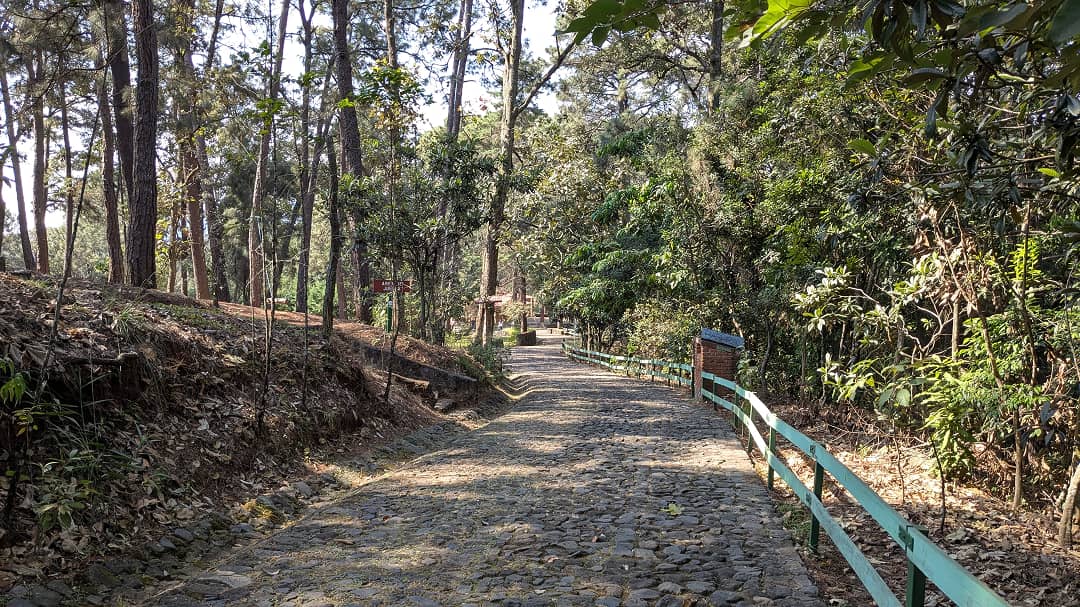
The access road to the park already sets the mood. Old cobblestones between taller and taller trees, filtered light through the branches, the city noise fading behind.
At the parking lot, the first thing that greets you is an old man with his horse, as calm as if he’d been there for decades — which he probably has.
”¿Le doy un aventón hasta la cascada, joven?”
We decided to walk. Not out of bravery, but because Josué had told me the path was worth it. He was right.
Before going down, we passed the stalls at the entrance: micheladas, aguas frescas, snacks, jícama with chili. The smell of lime and chamoy in the hot air — that’s Michoacán in its purest form.
The 579 Steps (and What Awaits Below)
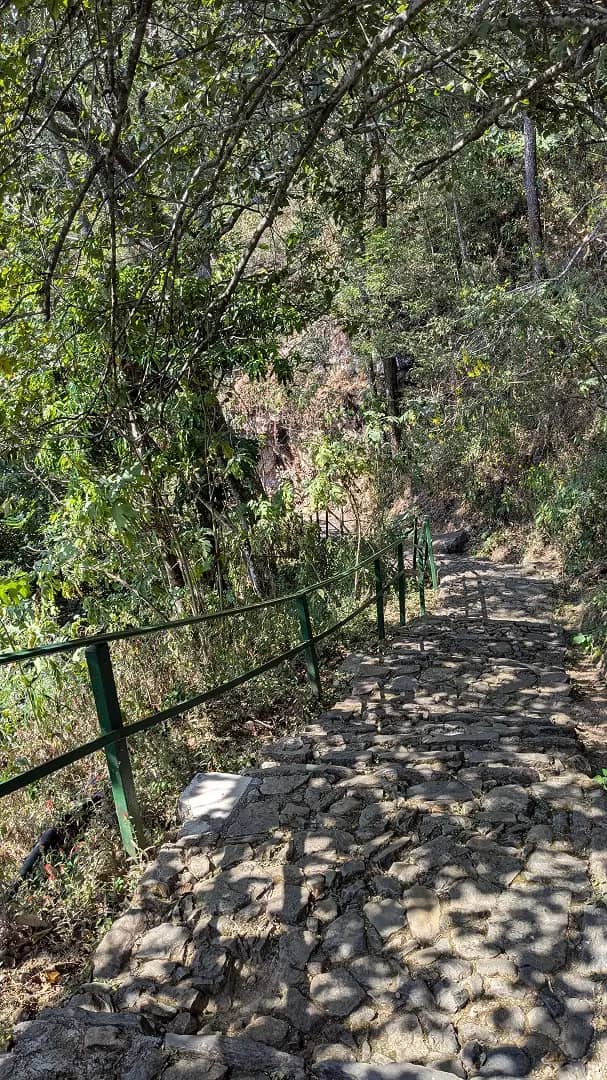
I’m not going to lie to you: it’s a lot of steps. The descent drops more than 200 meters between volcanic rock walls, denser vegetation as you go, and the sound of water growing louder the closer you get.
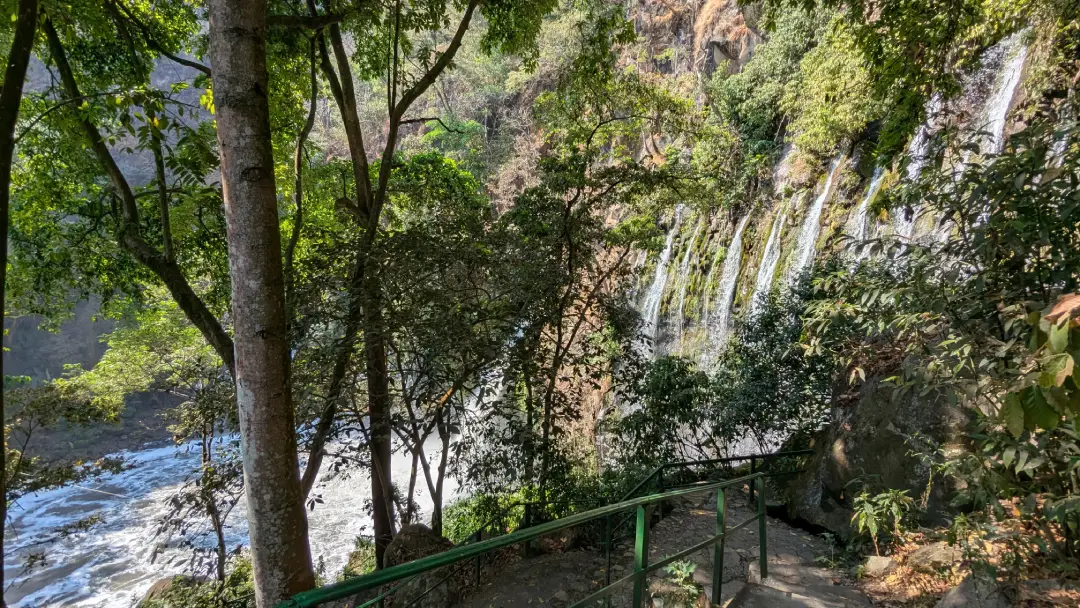
Halfway down, there are viewpoints where you can see the forest opening below. Squirrels peek out between the trees. During the rainy season, they say everything gets covered in fog and orchids bloom — something I’ll have to come back to see.
And the path isn’t just a path. At several points along the descent, there are small stalls with aguas frescas, snacks, and soft drinks — in case the heat gets to you before you reach the bottom. There are also two or three souvenir shops with T-shirts, keychains, and handicrafts. Nothing pretentious, all local.
But what caught my attention most at the halfway point was the zip-line station. Two lines cross the canyon at different sections — going and returning — flying over the gorge with the sound of water below and the forest opening on both sides.
We didn’t do it that day — we were on a mission to reach the waterfall and continue the route — but I watched it with healthy envy. The next visit has a name: zip-line.
And then you see it.
No way.
A 40-meter curtain of water falling over volcanic rock, surrounded by green, with a sound that wraps around you and humid, fresh air that feels like a gift in the midday heat.
The waterfall has two drops: a wider, slower one on the left, and a more concentrated, powerful one on the right. Between the two, they form a natural pool at the base of the canyon.
The “Captain” of the Gondola
At the bottom of the canyon, right where the river crosses before the waterfall, there’s a small stone bridge. And next to the bridge, a man with a rope pulls a small boat across the river — a kind of handmade gondola.
I don’t know if he has an official captain’s title, but he deserves it.
For a few pesos, he takes you from one side to the other. An attraction you won’t find in any tourist brochure, and one that perfectly summarizes the spirit of the place: simple, local, with all the spark in the world.
We stayed down there for a good while. The sound of the water. The refreshing mist reaching where you stand. The sun warming your back while the waterfall cools your face.
Qué mamalón este lugar, en serio.
The Reward: One-Liter Michelada for 90 Pesos
Climbing the 579 steps in the midday sun has its price.
But also its reward.
Up top, at the entrance stalls, we ordered two micheladas. One liter. Ninety pesos. With jícama, pineapple, and cucumber on the rim — the garnish as it should be.
I sat at a small wooden table, the glass sweating in my hands, looking at the forest, listening to the distant water.
Some moments need no further explanation.
Practical Information
Location: Carretera Uruapan – Carapan km 87, approximately 10 km south of Uruapan.
How to get there: From Morelia, there is a direct bus to Uruapan (ETN or Primera Plus from Terminal Poniente, approx. 1.5 hours). From Uruapan, you can take a taxi or local shared van to Tzaráracua.
Opening hours: Monday to Sunday, 9:00 AM to 5:00 PM.
Options for descending to the waterfall:
- On foot: 579 steps, approx. 45 minutes going down. Moderate difficulty.
- On horseback: available at the parking lot. Ask for the price directly — around 100 pesos round trip.
Other activities in the park:
- Zip-line: two circuits halfway over the canyon — you can go and return. Confirm prices at the ticket office.
- Rappel on volcanic rock
- Camping with grills
- Gotcha / paintball
- Volleyball and basketball courts
During the hike: Along the steps, you’ll find several stalls with drinks and snacks — you don’t have to carry everything from the top. There are also 2 or 3 souvenir shops (T-shirts, keychains, local crafts) if you want to take a memory with you.
Recommended extension: If you have energy, a 20-minute walk takes you to the Tzararacuita — a smaller, more hidden waterfall. Note: its waters often have a greenish tint due to urban runoff. Not recommended for swimming.
What to bring:
- Comfortable shoes with good grip (the steps can be wet)
- Enough water — although there are stalls along the route, bringing your own saves time and money
- A light sweater for the descent (the microclimate near the waterfall is considerably cooler)
- Cash — everything runs on cash
Entrance fee: Varies by season. Confirm at the ticket office upon arrival.
Is Tzaráracua Worth It?
Yes. Without a doubt.
It’s not the most Instagrammable place in Mexico. It doesn’t have the infrastructure of a theme park. But it has something that is becoming scarce in tourism: you feel like a visitor in a real place, not a customer at a spectacle.
The stalls with homemade micheladas. The old man with the horse. The gondola captain. The steps that hurt a little but are worth every one.
And above all, the waterfall itself — which, after descending those 579 steps, greets you as if it had been waiting for you.
As Josué told me while we climbed back up, sweaty and happy:
“¿Ya ves por qué uno no se va de Michoacán?”
Sí, wey. Ya veo.
What Comes After Tzaráracua?
Tzaráracua is just the beginning of what Uruapan has to offer.
We continued that same day to San Juan Nuevo — a town with a unique history tied to the Paricutín Volcano — and then spent the afternoon with Josué’s family in Uruapan. But those are other stories for other articles.
→ Coming soon: San Juan Nuevo and the town that survived the volcano → Coming soon: Uruapan from the inside — what you see when you go with a local family
Frequently Asked Questions About Tzaráracua
How much time do you need to visit Tzaráracua? With the descent, time by the waterfall, and the climb back up, plan for 2 to 3 hours. If you add the Tzararacuita or activities like zip-lining, it easily becomes half a day.
Is it possible to swim in the waterfall? At the main Tzaráracua waterfall, yes, although the water is cold. Swimming in the Tzararacuita is not recommended due to water quality.
Can you go without a car? Yes. From Uruapan, there are shared vans and taxis that reach the park. From Morelia or Mexico City, the most practical option is to get to Uruapan by bus first, then take local transport.
How difficult is the hike? Moderate. The 579 steps are the biggest challenge, especially the climb back up in the midday heat. No special preparation is required, but proper footwear is important.
Do you need to book in advance? No. You enter directly at the ticket office. In high season (Easter, summer, long weekends), there may be more visitors — arrive early.